Ryan and his team leaned into relationships built over years in the Port of Virginia ecosystem and beyond, contacting professionals who represent every link in global trade. The goal was to create an experience that would feel immersive, not theoretical. Something students could see, touch, and understand.
That industry engagement included customs brokers, experts in tariffs and international trade, warehousing leaders, stevedores and terminal operators, motor carriers, government agencies, and associations that help coordinate the broader maritime system. Each role matters. Each step is connected. When students see that connection, they start to understand that the supply chain is not one job; it is thousands of careers working in sync.
This project could not have come together without the contacts, resources, and support of the Virginia Maritime Association (VMA), its diverse committees, its network of member companies, and the outstanding individuals who represent them. VMA’s involvement helped transform an ambitious idea into a coordinated effort that bridges education and industry in a way that is rare and deeply needed.
For Ryan, this work is also personal. His passion for the maritime industry was shaped by watching his grandmother, Shirley Roebuck, help build a legacy in Hampton Roads that left a mark on the entire community. He often speaks about growing up and seeing the difference she made, not just for the small independent motor carrier, but for the greater maritime supply chain. He thrives on the stories shared by her colleagues, stories of resilience, stern resolve, and selfless service. Those stories are more than memories; they are a standard. They are a reminder that leadership in this industry has always been about serving something bigger than yourself.
That same spirit has carried this initiative beyond Hampton Roads. Ryan has taken these ideas to Richmond, where he has met with legislators and discussed the importance of expanding supply chain education across the Commonwealth. The response has been strong, with broad interest in turning a local initiative into a model that could reach districts statewide. The vision is clear: give students a practical, descriptive understanding of how the port, intermodal trade, and the freight economy work, so they can see opportunity earlier and plan their future with better information.
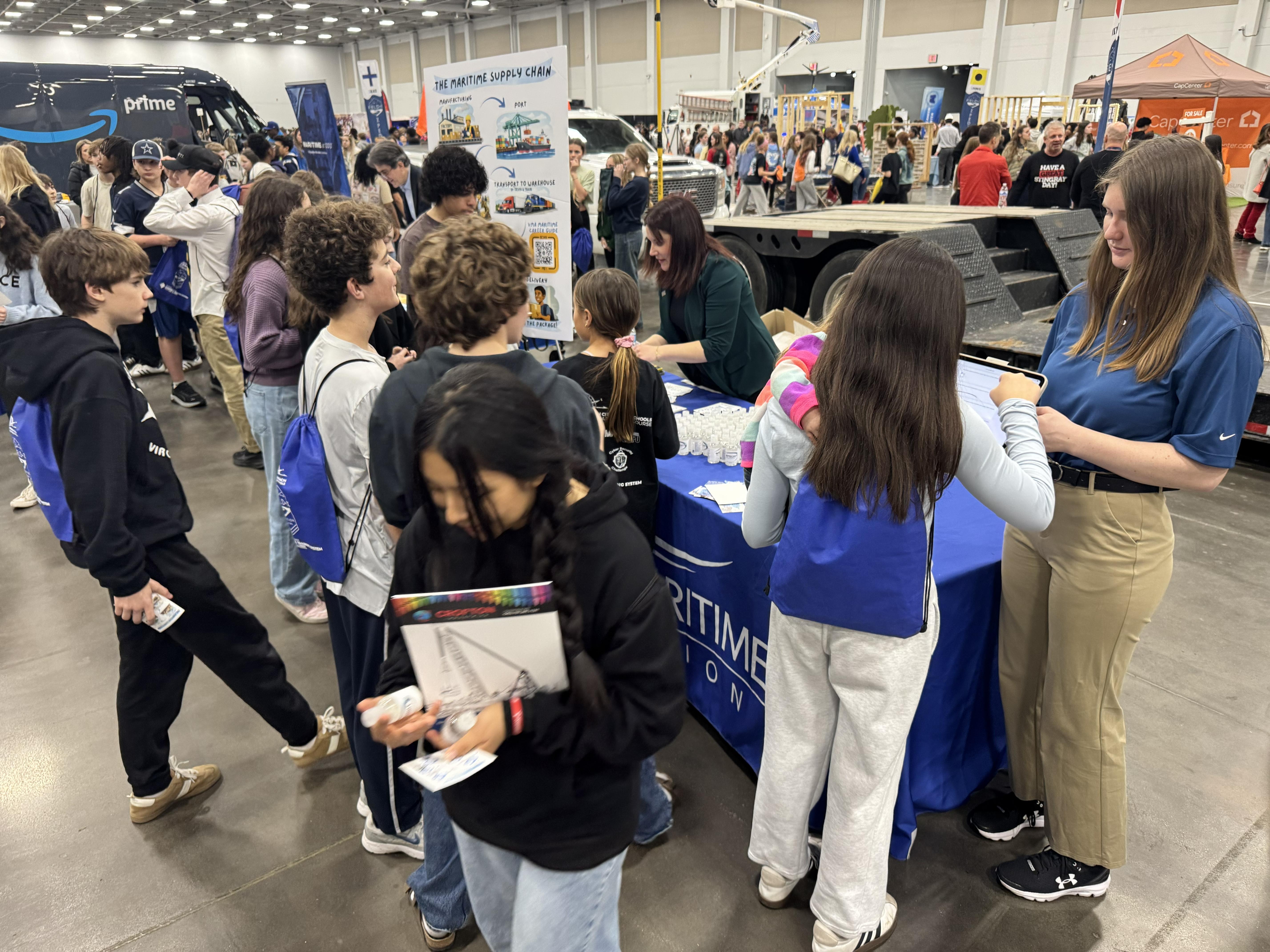 That vision became a reality on February 24th at the Virginia Beach Convention Center. On that day, the entire seventh-grade class from every middle school in Virginia Beach, approximately 4,800 students, had the opportunity to experience the maritime supply chain in a way designed for them at Xpedition Port O Call . Many students walked in with only a vague idea of what the port does. They walked out understanding how goods move, who makes it happen, and what careers are waiting in their own region.
This was more than an event. It is a blueprint for how education and industry can work together to strengthen Virginia’s future workforce.
That vision became a reality on February 24th at the Virginia Beach Convention Center. On that day, the entire seventh-grade class from every middle school in Virginia Beach, approximately 4,800 students, had the opportunity to experience the maritime supply chain in a way designed for them at Xpedition Port O Call . Many students walked in with only a vague idea of what the port does. They walked out understanding how goods move, who makes it happen, and what careers are waiting in their own region.
This was more than an event. It is a blueprint for how education and industry can work together to strengthen Virginia’s future workforce.